|
HW # |
Due | Read | Do |
|---|---|---|---|
| Final Exam | T 5/8 8:30- 11:30 am |
The final will be cumulative. Start reviewing now (4/27)! | |
|
17 |
W 5/2 | HW 17 : 1, 6 | |
|
|
Optional: Student Presentations If you want to learn more JavaScript, here's my favorite book for it: JavaScript Bible, by Danny Goodman If you want to learn C, my favorite book is: The C Programming Language, by Brian Kernighan and Dennis Ritchie (these are the people who invented C). Here's a picture of its cover: 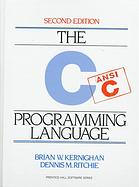 |
||
|
16 |
F 4/27 | JavaScript
class-demo : First download and save on your computer; then edit
using FrontPage or Notepad or other editor for plain-text or html. To
download and save: right-click, then choose "Save Target As" or "Save
Link As" (or something similar, depending on your browser). To open
this file with Notepad or some other editor, first open the editor, then
open this file by using "Open" in the editor's "File
menu".
Online JavaScript
Tutorial Just for fun: Simulator for "The twelve coins puzzle" (check out the program below the coins...) |
HW 16 |
|
15 |
F 4/13 | Read: How Stuff Works: Analog versus Digital , "Sections 1-4:" | HW 15 |
|
14 |
M 4/9 | Read Pages 35-55 of Churchland's book (Note: this is a somewhat large file, about 2.4 MB, so it may take a while to load, depending on the speed of your internet connection). You should read pages 35-48 carefully; the rest you can just skim. | HW 14 |
|
Midterm 2 |
F 4/6 |
The exam will cover HW 6-13. Start reviewing two weeks before the exam. The topics covered by this exam are much more abstract and difficult than those on the last exam. It's not enough to only be able to read and understand a proof; you should see if you can write them up without looking at all at your notes (and have me or someone else check them for you). |
On Wednesday, 4/4, come to class with any review questions you may have for the exam. |
|
13 |
M 3/26 | Read about the Hopfield Network: www.phy.syr.edu/courses www.phy.syr.edu/courses www.phy.syr.edu/courses |
HW 13 : 1, 5 |
|
Pick a presentaion topic |
F 3/23 | Start working on picking a topic for your presentation; you need to do
this and get my OK on it by 3/23. Here's a list of suggestions for presentation topics. I'll talk about some of these during the next few classes. Or you can come and ask me in person. You are not limited to just these topics, though. You can pick any topic that's related to computers, artificial intelligence, certain branches of cognitive science, etc., as long as you first run it by me to get my approval. |
Either email me your presentation topic (with a brief description of what you have in mind) or write it on a piece of paper with your name on it and hand it to me. |
|
12 |
W 3/21 |
Review your class notes. | HW 12. 1, 2, 4. |
|
11 |
W 3/7 |
Review your class notes. | HW 11. |
|
10 |
W 2/28 | Review your class notes. | HW 10. Also turn in HW 9 (I have added a hint to the problem for how to modify the proof we did in class). |
|
9 |
Review your class notes. | HW 9 : 2 | |
|
8 |
F 2/23 | Review your class notes. | HW 8 |
|
7 |
W 2/21 | Review your class notes. | HW 7 |
| F 2/16 | You should start reviewing at least a week before the test (it's a bad idea to try to review for this class just a couple of days before the test). The test will cover HWs 1-5. | ||
|
6 |
W 2/14 | Review your class notes. It might also help to search the web and read a bit about Church's Thesis (a.k.a. the Church-Turing Thesis) and about Universal (Turing or URM) machines. Please let me know if you find anything that you especially enjoy reading and find helpful and would like to share with the rest of the class. | HW 6 |
|
-- |
All of the following are optional: Introduction to Game of Life Applet #1 Applet #2 Turing Machines via Game of Life (original source) http://en.wikipedia.org/wiki/Conway%27s_Game_of_Life http://wwwhomes.uni-bielefeld.de/achim/gol.html http://entropymine.com/jason/life/links.html Interesting story on the history of computers |
||
|
5 |
F 2/9 | Read about Turing Machines by
Wednesday: Read Sec 1; skip 1.1; read Sec 2; read Sec 3, but skip "Non-deterministic Turing machines"; the subsection "A more complex machine" is optional: read it if you want to see an "involved" example. Here are some other links you may find useful: Alan Turing Homepage TM simulator in Java TM simulator in JavaScript |
HW 5 |
|
4 |
M 2/5 |
Review class notes on the Busy Beaver problem. | HW 4 |
|
3 |
W 1/31 | Read Section 1.4; skim 1.5 (in Cutland). | Sec 1.4 (p.23): 4.3. Sec 1.5: 5.2(1); use the coding convention discussed in class for negative integers. Extra problem: Show that the function f(x) = x + 2 is URM-computable over the integers (using the coding convention discussed in class for negative integers). For every program that you turn in for HW, you must try it out on the URM-simulator; and you must indicate which input values you tried and which ones "worked" or didn't. |
|
2 |
Section 1.3 of Cutland. | Sec 1.3 (p. 21-22): 1-4. 1, 3, 4. | |
|
1 |
W 1/24 | Sections 1.1, 1.2 of Cutland's Chapter 1. | Sec 1.2: 2.2, 2.3 (pages 14 & 16). Also, read and play with URM Simulator. |