Oligopoly conduct: Example 1 Dominant Firm Theory (Price Leadership)
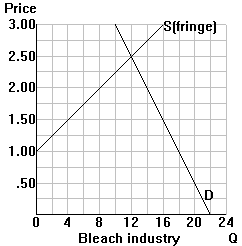
| 1. | Suppose Clorox did not exist: Equilibrium quantity = ______ Equilibrium price = ______ | |||||||||||||||||||||||||
 |
||||||||||||||||||||||||||
| 2. | Complete the following table to determine points on the demand curve facing Clorox: | |||||||||||||||||||||||||
|
||||||||||||||||||||||||||
|
||||||||||||||||||||||||||
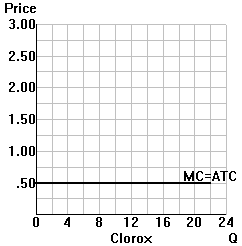
| 3. | Plot the demand curve for Clorox in the righthand panel above. | |||||||||||||||||||||||||
|
||||||||||||||||||||||||||
| 4. | Derive the marginal revenue curve (MRc) for
Clorox, and determine the profit-maximizing optimum. Price = ______ Quantity supplied by Clorox = ______ Quantity supplied by fringe = ______ Quantity consumed = ______ |
|||||||||||||||||||||||||
|
||||||||||||||||||||||||||
| 5. | In the righthand panel, indicate the profits and welfare loss associated with Clorox acting as a price leader instead of producing the efficient quantity. | |||||||||||||||||||||||||
|
||||||||||||||||||||||||||
| 6. | Clorox's profits = ______ Suppose instead that Clorox produces just enough to capture the entire bleach market. Clorox's new profits = ______ |
|||||||||||||||||||||||||
|
||||||||||||||||||||||||||